
Energy Banking: A tool to help you manage anxiety and fatigue
It can be difficult to know where to begin when we feel exhausted but can’t seem to rest, especially when our brain feels stuck worrying about all the things we need to do. You might find yourself struggling to concentrate in school, or wanting to sleep through a study period. But when it comes to time to go to bed, your thoughts are tangled up in tomorrow’s ever-growing to do list. Sometimes our body & brain might not be getting the sleep, food or breathing space that they need to recharge, and we can feel stuck in an anxiety-fatigue loop.
This is where energy banking can help. It is a tool that can help you identify what drains your energy battery, and what activities can help you recharge. Similar tools have been used by people struggling with chronic pain to help them pace their energy ( search ‘Spoon Theory’, by Christine Miserandino) and Maja Toudal coined the term ‘Energy Accounting’ as a way of thinking about how we deposit and withdraw from our energy bank.
In this blog we will explore simple ways that you can use this tool (and more from your Teen App) to help you manage anxiety and fatigue.
Using energy banking to pace yourself – some simple steps:
1. Create a list of what drains you (& what energises you)
Our first piece of advice is to take some time to understand what drains your battery, and what helps you recharge. In our 7 minute podcast called ‘Why am I so tired? Using Energy Banking’ you can find advice that will help you in this activity. Common energy drains include:
- Difficulty sleeping or eating
- Physical symptoms or illness
- Social anxiety
- Peer pressure
- Worry about school or organisational stress
- Procrastination & perfectionism
- Struggling with body image or confidence
- Adjusting to seasonal change
- Low mood, anxiety, stress
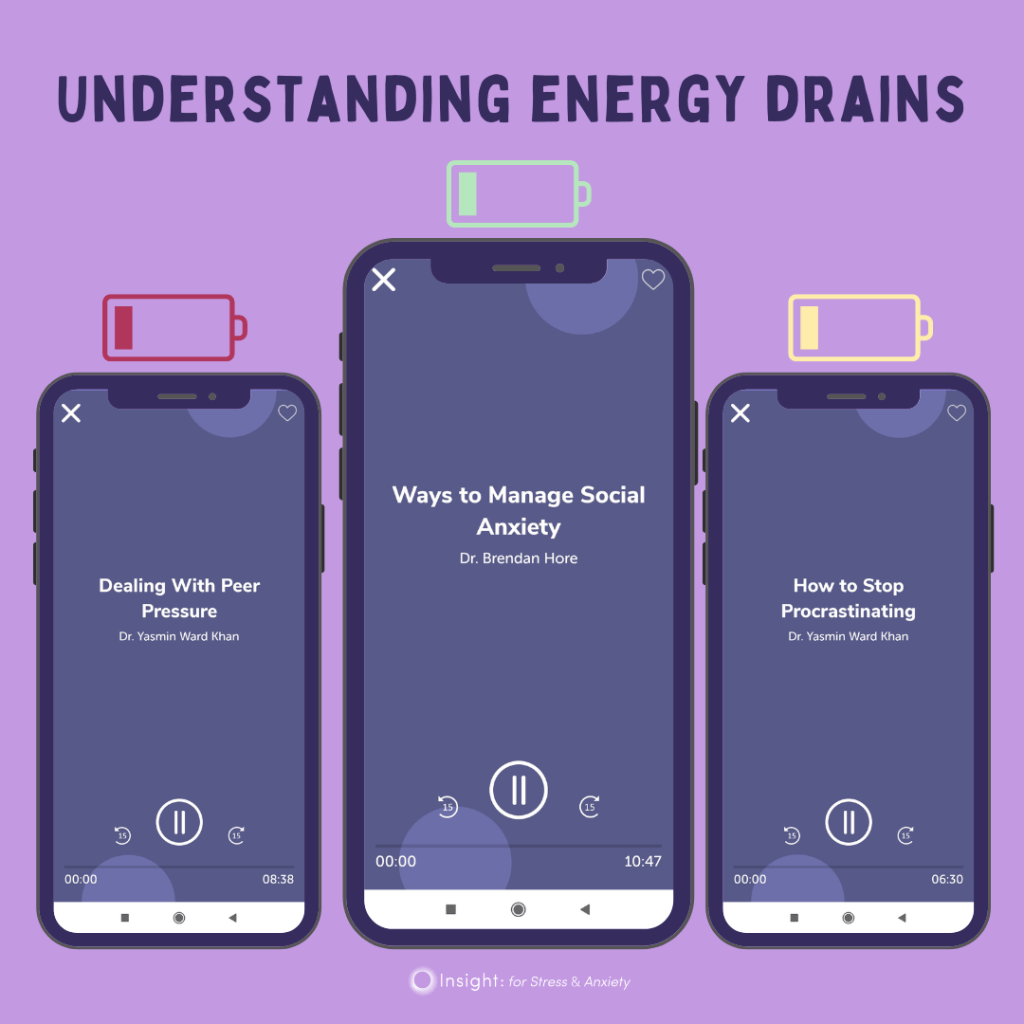
If you find that your battery is currently being drained by stress and worry, it can help to take some time to better understand the source of this anxiety. For example, if you are worried about school or study you may find our podcast ‘I want better grades but can’t study (8 mins) can help you identify why you might be struggling to focus. Here are some recommended podcasts to help you explore further:
2. Build a bank of things that help you decompress, rest and recharge
What relaxes you?
And what gives you energy?
There is no quick fix for fatigue, but creating a bank of activities that can nourish your body and brain, can help you to rest and recharge. For example, you might find that packing your things the night before school can reduce the morning rush. Or putting snacks and water in your bag can help with those wobbly moments when you run out of fuel.
What helps you clear your head?
A walk, run, music, shower?
Time with your friends or time spent alone?
It doesn’t matter if your bank of activities looks different to everyone’s around you – think of it like having a different model of phone and finding the right charger for you. Listen to ‘How to recharge your brain & body’ (10 mins) on our teen app for more advice from our Psychology team.
The following podcasts and meditations are some of our most listened to tools to help you bank your energy across your week:
- Creating a positive mindset for your day (meditation – 4 mins)
- Ideas for self-care (podcast – 9 mins)
- Organisational strategies that can reduce school & homework stress (podcast – 12 mins)
- Letting go for sleep (meditation – 30 minutes)

3. Feel stuck in overthinking mode? Try these techniques:
When our brain gets caught in a thinking loop we can find ourselves stuck in ‘threat mode’. This overthinking is a big energy drain and it can help to learn some techniques to switch into a mode where you feel safe and relaxed. You might begin with our podcast ‘How anxiety affects our thinking and how to challenge it’, where our psychologist explores ways to get out of a thinking trap. Or listen to this guided meditation: ‘How to shut off the thinking brain’.
Here are some more tools to help if you are feeling stuck or overwhelmed:

4. Remember to keep it simple & give yourself a break
Energy banking does not have to be another task to add to the to do list. Try to keep it simple and just check in with yourself regularly.
How am I feeling?
What’s draining my battery right now?
What time, space or activity can I gift myself this week to bank some energy in my battery?
It might be as small as giving yourself extra screen breaks in the evening, or getting outside in natural light for even 10-15 minutes each day. This simple eye relaxation technique can help soothe tired eyes, both at school or at home:
With the many demands in your week we know that it can feel really difficult to recharge your battery if it is being drained just as quick. However we encourage you to be gentle with yourself, especially when you haven’t done the things you feel ‘you should do’ to help you pace your week. Remind yourself that you are trying your best, try to give yourself a break, and release a tough week to start fresh into a new one.
You can download our app series for free on our website www.insightforall.com
Click here and input INSIG30 to avail of 30% off our premium annual subscription
(offer available until the end of September)
 The Insight Centre