For those of you who follow bloggers, vloggers and so called “influencers”, you will most likely be aware of the recent uproar amongst this particular group in relation to the falsification of photographs and the use of Photoshop to enhance images of themselves. For those of you who don’t, the title of “influencer” is a relatively new concept and is a word used to describe someone who has amassed a significant number of followers on social media, be that Snapchat, Instagram, Facebook or YouTube and who collaborates with brands to advertise their products to these audiences. These internet stars document their lives online and usually speak about a particular topic of interest or expertise, such as travel, beauty, fitness or fashion. Brands pay them money to advertise and speak about their products, in the hopes that their followers will be influenced to purchase them.
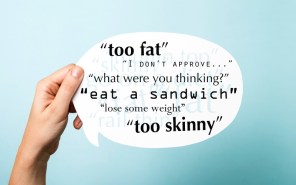
Recently, an Instagram account was set up with the intention of calling out some of these influencers for posting dramatically altered pictures of themselves and portraying unrealistic body expectations. Certain bloggers were accused of using Photoshop to alter their facial features and body proportions, in an attempt to make themselves look skinnier. The online community hit back and ridiculed these social media stars for trying to sell and promote an unhealthy, unrealistic and unattainable body image. This got us thinking here at The Insight Centre about body image, social media, self-confidence, mental health and the ways in which all of these factors can be linked.
For many young girls, and indeed boys, nowadays, social media is such a massive part of their lives. Everyone seems to be on most social media platforms, constantly consuming the content put out by these influencers. Research has found that in today’s media, images suggest that beauty is equated with thinness for females and a lean muscular body for males. More recent research has shown that eating disorders can be transmitted like a virus through social networks. Escaping the pressure and influence of social media can be difficult. For vulnerable individuals, constant streams of unrealistic idealism and seeking to conform to the expectations of bloggers and models may heighten levels of stress and anxiety. The average young person can spend a combined 6-7 hours per day watching TV or on social media sites. The National Centre for Eating Disorders found that is almost impossible to change sociocultural influences in today’s world due to the individual personal attitude and belief that what they see is significant to them. This means that the influence of these “influencers”, particularly on young people, is profound.
It has been well established that media exposure to images depicting the thin-ideal body, is linked to women’s generalized dissatisfaction with their bodies, increased investment in appearance, and in- creased endorsement of disordered eating behaviors. These are frightening findings that highlight the negative and dangerous impact of these misleading images being churned out by bloggers. While writing this blog post I took to the explore button of my Instagram to search some of social media’s most followed accounts. I found myself not only overwhelmed by the amount of thin-ideal body images, but also thanking my lucky stars that Instagram was not around during my teenage years. Sixteen year old me was already trying to juggle friendships, relationships, hormones, exams and all the other stresses and worries associated with adolescence. Comparing myself to my peers was torment enough, I dread to think of impact on my self- confidence had I been striving for the bodies of today’s Instagram stars.
So, what can we, as professionals, and parents do to try and counteract the negative impact of over exposure to these images. We could try and ban our teens from using social media or following certain pages, but any mother of a teenage daughter knows that this is completely unrealistic. It doesn’t have to be about trying to over control or over police our children’s social media consumption, but rather to educate them on healthy body expectations. A piece of research found that educating young women about the artificial methods used to enhance and alter media images and educating them on genetic realities reduced the negative impact on their own body-image. Simply put, by educating and reminding young people that these images have been digitally enhanced and that very few people are genetically predisposed to have the thin model like figures found on social media.
Social media is here to stay and while we may not be able to completely control what our children and teenagers consume online, we can certainly work on their education and self-esteem, in the hope that this will in turn act as a shield to the darker side of the online world. In relation to body image and self-esteem, by simply opening up a conversation about the unrealistic nature of these images, we can strengthen and protect our teens own self-image. Our body size and shape is our unique as our fingerprint. No two people are the same and we sometimes need to be reminded of this and to embrace it. Images on social media can be nice to look at, but are not always a true reflection of real life, information that impressionable young people need to be equipped with as they navigate the battle field of social media.
Written by Laura Patterson, Assistant Psychologist, The Insight Centre
http://www.theinsightcentre.ie
Like us on Facebook: The Insight Centre
Tel: (01)-8463894
 The Insight Centre