
What is the After-School Restraint Collapse?
Andrea Loewen Nair, a counsellor and parenting educator coined the term “after-school restraint collapse” to describe the type of meltdown that we see after a busy school day.
This restraint collapse can occur for both children and teens, and is often a sign that our child has been holding it in during classes. Big feelings build up, and we see them spill over as they feel safe to let it all out at home.
An after school meltdown might look like:
- Screaming, shouting, crying
- Throwing things or lashing out
- Refusing to respond to requests
- Being rude or hiding in their room
- Picking fights with you or their siblings
While the after-school restraint collapse can affect all kids, it can occur more frequently for children who may be struggling to navigate the demands of school. For example, if your child experiences any difference in how they learn or take in information, it will likely mean that they are using more energy than a child whose learning style alligns more easily with the curriculum. So across the day, a child who uses more energy may feel drained and overwhelmed after school – which can make them more vulnerable to a restraint collapse. Children or teens who have a tricky time with things like friendships, sleep schedules, anxiety, sensory sensitivies, are also more likely experience this type of meltdown. Learning how to respond to your child in these moments can have a powerful impact on the wellbeing of the whole family.
What can I do to help prevent or reduce these meltdowns?
Build Understanding:
Our first piece of advice is to take some time to understand your child’s experience. Learn the difference between a tantrum and a meltdown in our advice podcast on your Parent App. Use analogies to help your child or teen build an understanding about why the afterschool meltdown can happen. In the podcast ‘Why is my child overwhelmed: The Bathtub Analogy’ our team walks you through the ways that you can describe a ‘demands bath’ to your child, and try an activity together than can help your child identity what stressors cause their bath to overflow.
Reduce Questions afterschool:
Think about how it feels when you have a million things on your mind and someone asks you to tell them about your day. Sometimes it can be this simple question that triggers overwhelm, especially if a child is feeling drained or overstimulated after school. We know that it can be tricky to hold back questions, especially when you are excited to hear about their day. However, creating a demand & question free space in the hour or so after school can reduce the likelihood of a restraint collapse.
Create an Afterschool Decompression Session:
Think about what helps your child or teen to decompress. This might look like a high energy activity if they seem overstimulated by their day (i.e. trampoline, running outside, jumping jacks, crunchy foods, helping lift or move things). Some children who appear sluggish in energy may also benefit from a more active activity. Using relaxation activities, snacks, a sensory toolkit, or passively watching a favourite show while wrapped in a blanket can help children both regulate and recharge their energy. Often parents ask our team what are the ‘correct’ activities to include in a Decompression Session and our advice is to simply try a range and notice what works for your child and what doesn’t. Creating a menu for this session can make it a part of homelife that benefits the whole family. For more tips and advice, watch this video from Dr. Stacey:
Nourish their morning routine:
It’s easy to forget that reducing stress across the day will also reduce the likelihood of an afterschool restraint collapse. Take sometime to think about how you can start the day in a stress-free way. You might find that getting up earlier or prepping more the night before can help you all feel less rushed. A visual schedule can help children of any age, especially if they find sequencing tasks is a big energy drain for them. Reducing words and adding more nonverbal connection (hugs, pointing, timers) can alleviate stress, and playing soothing music can create a relaxing environment for everyone.
Tools to help you cope when a meltdown happens
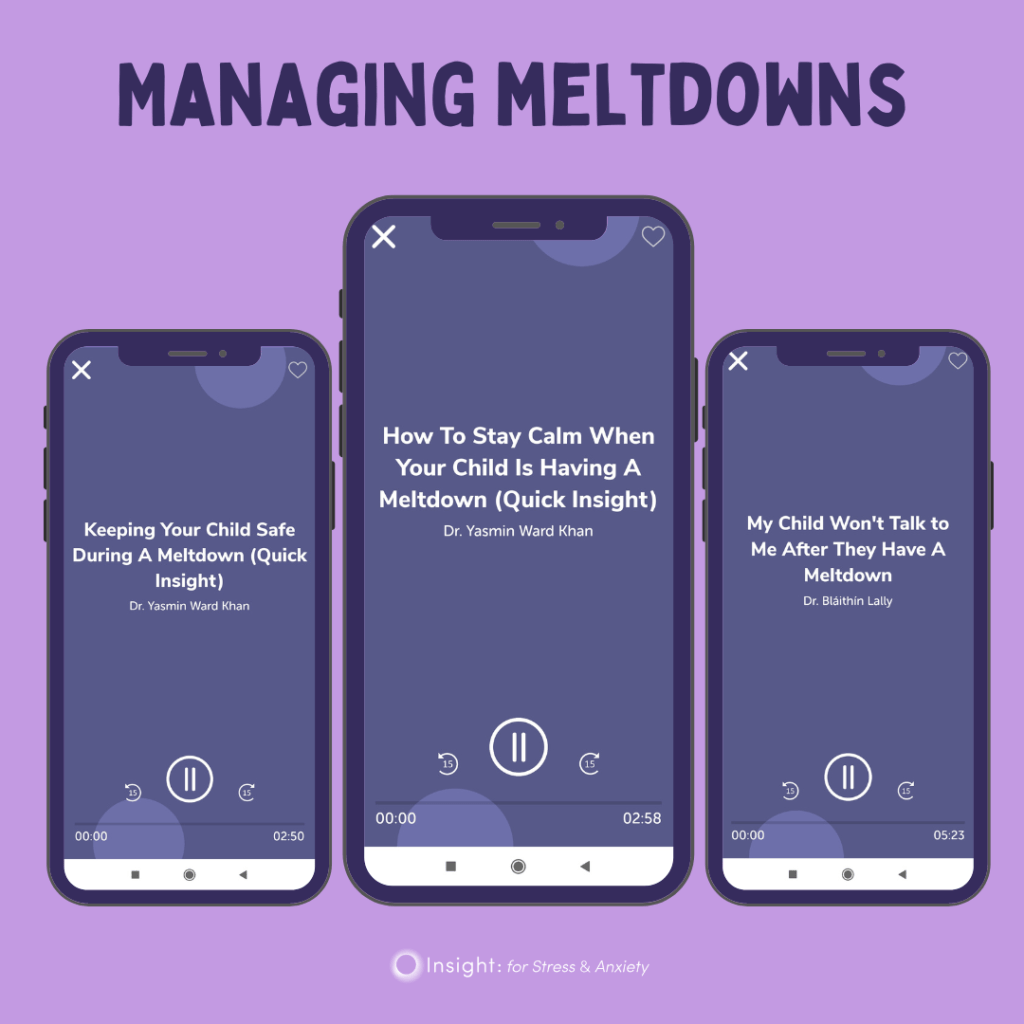
As parents it is not always possible to prevent or avoid an after school meltdown. But you can create a toolkit to help you through them. Remember a meltdown differs from a tantrum in that your child has no control in that moment. If you try to bring in punishments or reward systems here, you’ll find that it only adds to an already overflowing demands bath. So even if your child has thrown something across the room in frustration, we are going to focus on connection and regulation before any type of correction. In the Managing Meltdowns section on our Parent App, you can find a range of podcasts that can help you during and after the stormy weather. We also recommend these meditations and quick calming tools for those moments where you feel triggered by your childs behaviour:
- Pressing the Pause Button (6 mins)
- For when you are frustrated with your child (7 mins)
- Emotional check-in (5 mins)
- For when you feel guilty (16 mins)
Tools to help your child & teen cope with meltdowns
Creating a toolkit for your child or teen can help take the heat out of the afterschool meltdown. Are they overscheduled? Do you need to check in with their teacher to see if they can empty out their bath during the day? What activities can you try in your afterschool decompression session? These are all questions that can guide you to what tools will be most effective in your child/teens toolkit.
Building your child’s exposure to relaxation techniques is positive place to start. Remember to introduce any new tool at a time when they are calm and you have space to connect with them. You might try a breathing technique or muscle relaxation exercise together before bed. Or create a sensory toolbox together that you can add to over time (see the Podcast : ‘The Sensory Toolkit. What it is and why it’s helpful’ in the Coping Section on your Parent App). Reading a therapeutic story together can help you talk about a meltdown in a more indirect way, which can be really helpful for children who ‘shut down’ when you try to discuss it. The following practices be saved into the toolkit on our InsightKids App:
- Breathing animations – Balloon Breathing
- Progressive Muscle Relaxation – A Forest Walk
- Brain Training – Our Calming Sense of Smell
- Therapeutic Stories – Aisling and her worried body
- Therapeutic Stories – Being a feelings detective!
For teens it can help to think about their morning and after school routine so see where you might create some space for them to rest and recharge. You might open a conversation with ‘I’ve noticed that after school you want to spend a lot of time in your room. Are you feeling wired (overstimulated) or tired(energy drained)? And is there anything I can do to help?’. Again it’s common for teens to shutdown these types of conversations so try to keep calm when this happens and remember that it’s not personal. If you continue to nourish opportunities for them to rest and recharge (i.e. remind them to take study breaks, prompt them to eat/hydrate after school, create screentime contracts together, invite them to go for a walk or drive or a class together). Managing meltdowns for this age group is typically about pressing your own pause button, creating and getting creative with opportunities for connection and communication, and helping them find the tools that will support them. The following are some of our recommended listens from the Teenage Issues section on our Parent App:
- My teen is using worrying statements – what to do and how to respond
- My teen doesn’t spend time with me anymore – what can I do?
- Negotiating screentime with teens
- Why am I so tired? How to use Energy Banking for yourself and your teen
- Overscheduled teens and how to support them
You can download our app series for free on our website www.insightforall.com
Click here and input INSIG30 to avail of 30% off our premium annual subscription
(offer available until the end of September)
 The Insight Centre